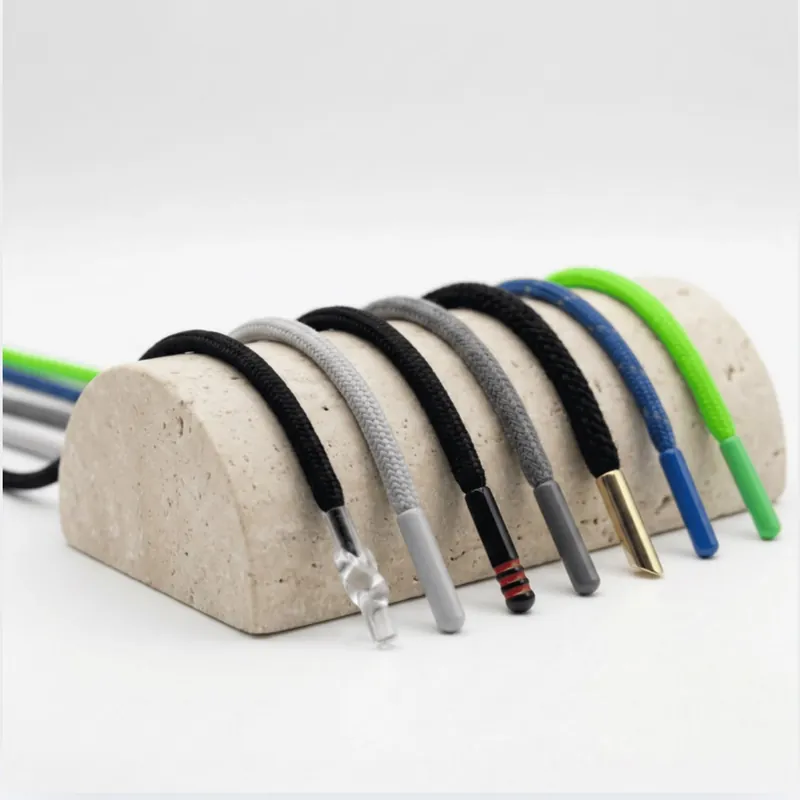
 Hover to zoom
32-Spindle Filled Polyester Drawcord
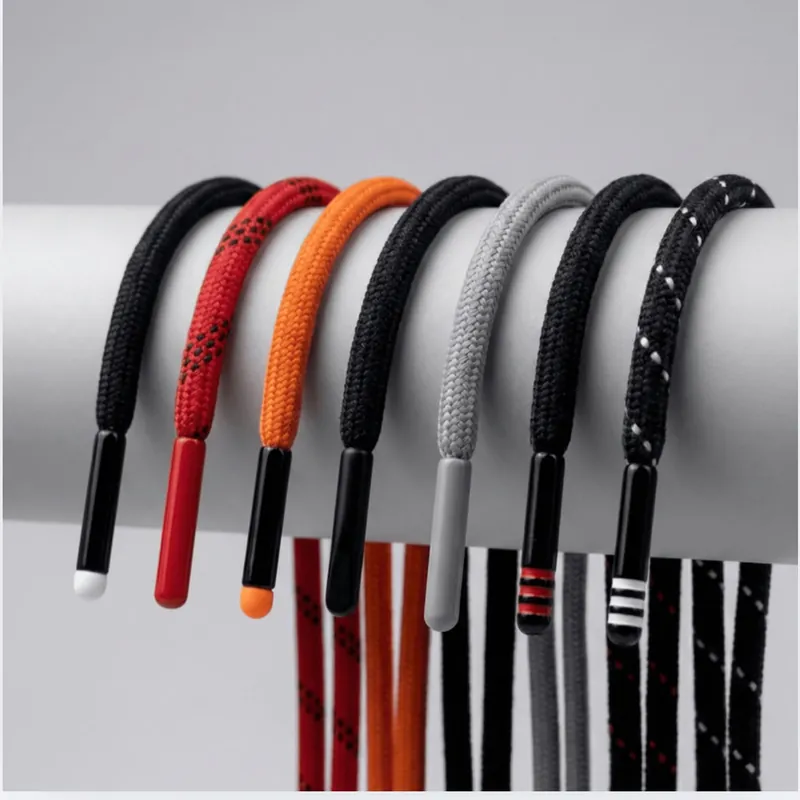
A 32-spindle braided, filled polyester drawcord. Plastic and metal cord end options are available.
Plastic and metal cord end options are available.
- Product groups
- Drawcords
- Braid
- 32-spindle
- Material
- Polyester
- Construction
- Filled
- Cord end
- Plastic / Metal
- Production
- Istanbul · Custom colors and sizes for your brand
More often than not, it is the tip that tells a user how carefully a drawcord has been made. We produce our 32-spindle filled polyester drawcord with both plastic and metal cord end options, and we treat the end finishing stage as seriously as the cord itself. Together with you, we decide which cord end best suits your hoodie, tracksuit or bag based on how often the product will be used, its price segment and its design language, and we then manufacture it exclusively for your brand at our facility in Bağcılar, Istanbul.
Request a quoteTwo cord end options
The same 32-spindle filled body can be finished with either a plastic or a metal cord end. This makes it easy to build product groups that address different price segments and different design languages, all from a single cord specification.
Controlled end finishing
The section of the cord where the end will sit is carefully prepared during the cutting and fixing stages. As a result, the braid does not unravel, the cord end fits the cord perfectly, and nothing snags while the cord is being threaded through the channel.
Cord end and cord in harmony
The color of a plastic cord end, or the surface tone of a metal one, is planned together with the cord. Whether you want a tone-on-tone look or a deliberate contrast, the choice is made by eye on a physical sample, placed side by side with your fabric.
A tip built for everyday use
A cord end chosen in the correct diameter and fixed with the right technique stays in place through repeated pulling, knotting and washing. The tip of the drawcord therefore keeps looking neat and tidy throughout the entire service life of your product.
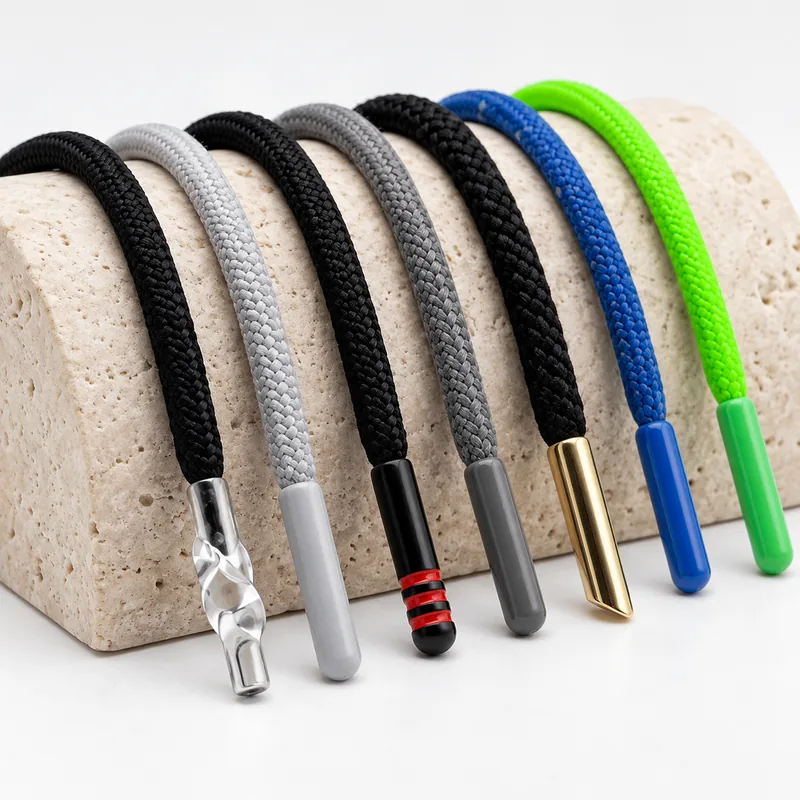
The cord end is the smallest part of a drawcord, yet it is the first thing a user’s fingers touch every time, and it is where they judge its quality.
The right cord end extends the life of a drawcord
No matter how well made the body of a drawcord is, if its end is left open, the braid gradually unravels, the yarns start to fuzz and the cord eventually becomes impossible to thread through the channel. The cord end is a small but critical component that solves this problem: it secures the tip of the cord, gives it a firm and clean point, and makes the product look properly finished. Because the 32-spindle filled polyester drawcord has a full, round body, the cord end diameter has to be matched to that fullness. A cord end that is too narrow will not sit on the cord, while one that is too wide may loosen during use. That is why we select the cord end together with the cord, within the same sampling process.
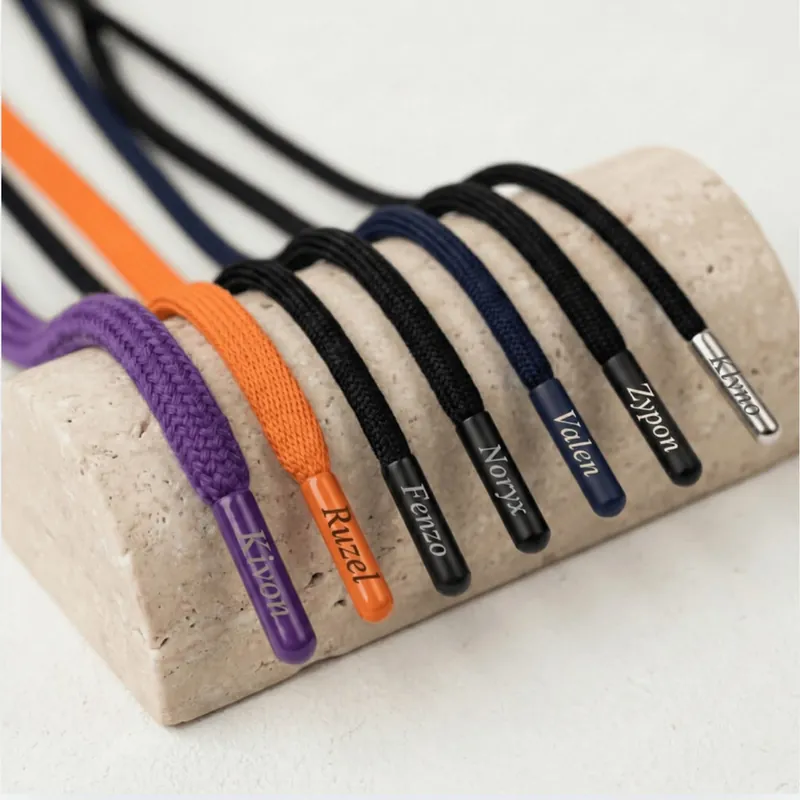
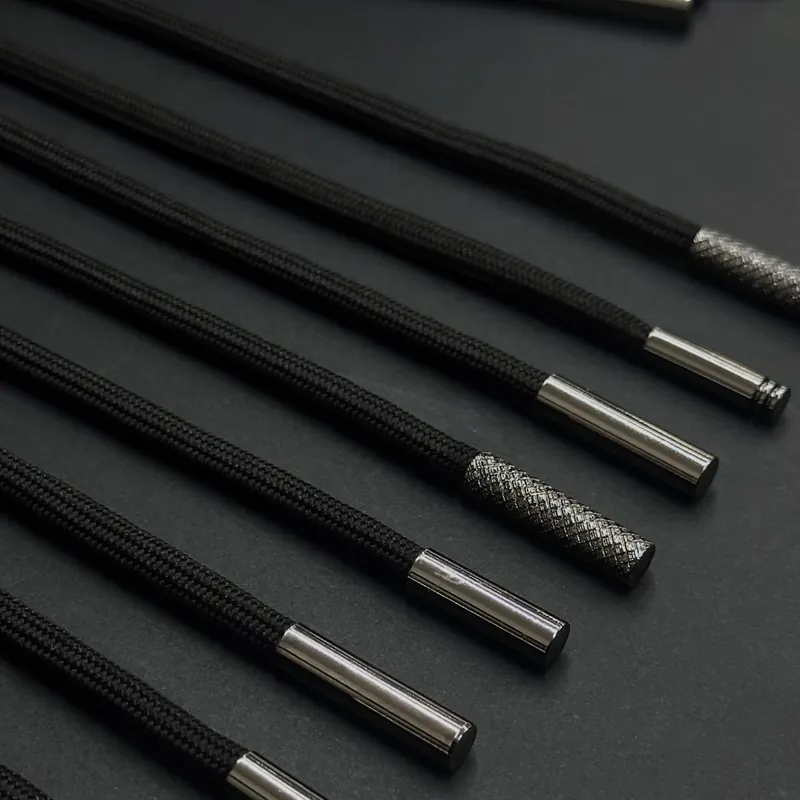
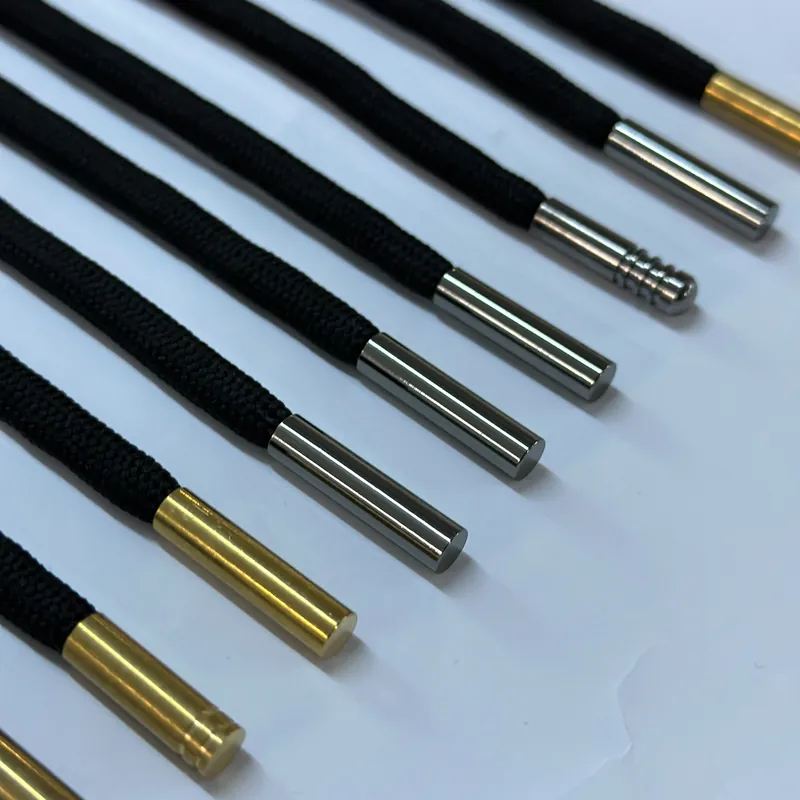
Plastic cord ends stand out for their light weight, wide color range and soft touch. Since they can be matched exactly to the cord color, they create an almost invisible finish in tone-on-tone designs; chosen in a contrasting color, they add a sporty accent instead. Metal cord ends, with their weight and shiny surface, give the drawcord a more pronounced presence, help hood drawcord tips hang straight and balanced, and raise the perceived quality of the garment. Plastic cord ends are more often chosen for casual and youth collections, while metal cord ends are favored for premium and urban-style products. Both options can be applied to the same 32-spindle filled body.
End finishing is about much more than simply attaching a cord end. First, the cord is cut to the specified length; with polyester yarn, the cut area is heat-sealed where necessary to prevent fraying. Metal cord ends are crimped onto the cord with a press and close tightly around it. For plastic cord ends, depending on the type, methods such as molding the tip directly in a die or threading on and securing a ready-made cord end are used. In both cases, the aim is for the cord end to withstand pulling force and stay put through every wash. At Elif Tekstil Aksesuarları, we first test these steps on a sample in our sampling department, and once you approve, we apply exactly the same settings in bulk production.
32-Spindle Filled Polyester Drawcord technical details
Values indicate typical production ranges; final size, color and material are confirmed upon sample approval.
- Product name (EN)
- Filled Polyester Cord
- Braid
- 32-spindle (32 spindles)
- Material
- Polyester
- Construction
- Filled (cored)
- Cord end
- Plastic / Metal
- Plastic cord end
- Lightweight, color-matched
- Metal cord end
- Press-crimped, pronounced look
- End preparation
- Cutting, sealing, fixing
- Cord end diameter
- Matched to cord fullness
- Length
- Cut to order
- Logo
- Laser engraving on metal cord ends (on request)
- Color
- Cord and cord end matching
Where is it used?
Key applications for 32-Spindle Filled Polyester Drawcord.
Hoodies
On hood drawcords, metal cord ends add weight to the tips so the cord hangs straight and balanced, while plastic cord ends offer a lightweight and quiet feel in daily use.
Tracksuits and joggers
On tracksuit and jogger waistbands, a tipped drawcord is far less likely to slip back into the channel and gives the wearer a neat, easy-to-grip handle when tying it.
Youth collections
Brightly colored plastic cord ends contrast with the drawcord in youthful and sporty collections, giving the garment an energetic, playful look; a separate cord end shade can be chosen for every colorway.
Premium products
Drawcords with metal cord ends give heavyweight sweatshirts and urban-style hoodies a quality finish and visibly reinforce the price positioning of the product.
Lightweight outerwear
On the hood and hem adjusters of windbreakers, raincoats and light jackets, the tipped end passes easily through the cord lock, keeps the tip from fraying and makes every adjustment quick and comfortable.
Bags and pouches
On drawstring bags and product pouches, a tipped drawcord protects its ends despite the opening being pulled open and closed again and again, and helps the accessory look carefully finished.
Your options in plastic and metal cord ends
Choosing a cord end does not stop at the material. Details such as color, surface finish, length and personalization also shape the final look of the drawcord. We review the options below together with you according to how your product will be used, and refine them step by step on a physical sample.
About custom manufacturing- 01
Colored plastic cord end
Plastic cord ends that match the cord color exactly, or that create a deliberate contrast, are lightweight and quiet. Thanks to the wide range of colors available, they can easily be adapted to the different colorways of a collection as well.
- 02
Metal cord end surface tone
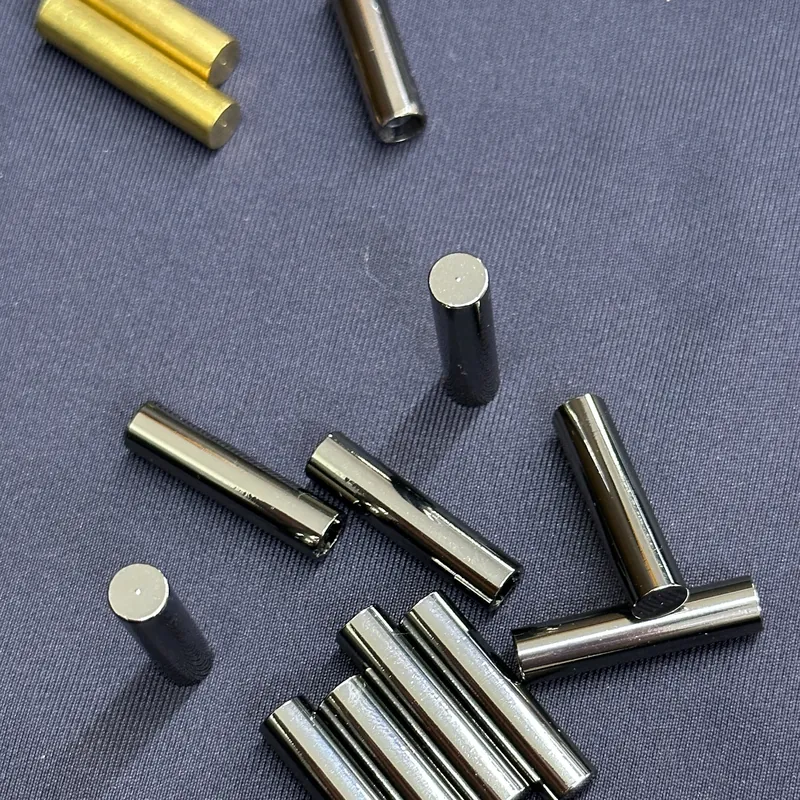
Metal cord ends can be selected in surface tones that harmonize with the cord color and with the other metal trims on the garment. When the zipper, buttons and cord end share the same tone, the result is a cohesive, unified look.
- 03
Cord end length
A short cord end creates a clean, minimal tip, while a long cord end produces a more prominent, sporty one. The length is determined by considering how far the drawcord hangs and the overall proportions of the garment.
- 04
Laser engraving on the cord end
A logo or brand name can be laser engraved onto the surface of a metal cord end. This turns a plain filled drawcord into a detail that carries your brand’s signature and gets noticed every time the garment is worn.
- 05
Mixed collection planning
You can create different price segments by using the same cord specification with plastic cord ends in one product group and metal cord ends in another. Because the body stays the same, the collection keeps its visual consistency and inventory management becomes simpler too.
Plastic vs. metal cord ends compared
When choosing a cord end, weight, appearance, color flexibility and the conditions of use should all be weighed together. The table below compares the two cord end options with an untipped end to make your decision easier; we still recommend making the final choice on a physical sample.
| Criterion | With plastic cord end | With metal cord end | Untipped end |
|---|---|---|---|
| Weight | Light | Noticeable weight | Lightest |
| Appearance | Sporty, colorful | Shiny, premium | Plain, unfinished |
| Color flexibility | Exact match to cord | Limited to metal tones | Same as cord color |
| Threading through channel | Easy | Easy | Can be difficult |
| Logo application | Limited | Laser engraving | None |
| Typical segment | Casual, youth | Premium | Budget products |
From request to delivery, step by step
We stay in touch with you at every stage and never move on to the next step without your approval.
- 1
Use case
You tell us which product the drawcord will go on, which channel it will run through and how often it will be used. This information forms the basis for choosing between a plastic or metal cord end and for determining the right cord end diameter.
- 2
Cord end matching
Our design team prepares plastic cord end shades that suit the cord color, or metal surface finish options. The cord end length and diameter are recommended according to the dimensions of the 32-spindle filled body and presented to you.
- 3
End sample
Our sampling department finishes the drawcord with different cord end options as samples. On these samples, you have the opportunity to assess and compare pull strength, appearance and how easily the cord threads through the channel, together with your own garment.
- 4
Cutting and fixing
After approval, the drawcords are cut to the specified length, the ends are prepared, and the cord ends are fixed using the same settings as the sample. For metal cord ends, the press setting is checked regularly to make sure each cord end closes tightly.
- 5
End inspection and shipment
On randomly selected drawcords from production, cord end security is checked by pulling, and length is checked by comparison with the sample. The drawcords are then packed to your requirements, and shipment is planned together with you according to the scope of the order.
Quality control tips for tipped drawcords
- Pull the cord end firmly with your fingers; a correctly fixed tip should not slide along the cord.
- Carefully run a fingertip along the edges of metal cord ends to check for any burrs.
- Assess the plastic cord end color together with the cord in daylight to avoid any shade mismatch.
- When ironing, take care not to let the iron come into direct contact with metal or plastic cord ends.
- Tie the drawcord before washing to reduce knocking and wear on the cord ends in the machine.
- On samples taken from bulk production, compare cord end length and position with the approved sample.
32-Spindle Filled Polyester Drawcord: your questions answered
Can’t find the answer you’re looking for? Our team is happy to help.
Should I choose a plastic or a metal cord end for my drawcord?
The choice depends on your product’s segment and design language. Plastic cord ends are lightweight, quiet and flexible in terms of color; they are frequently chosen for casual and youth collections, either matched exactly to the cord or in contrasting shades. Metal cord ends, with their weight and shiny surface, raise the perceived quality of premium products. You can test both options side by side within the same sampling process.
How is a cord end attached to the drawcord?
First, the drawcord is cut to the specified length and the tip is prepared so that it will not fray. Metal cord ends are crimped onto the cord with a press and closed tightly around it. For plastic cord ends, depending on the type, the tip is either molded in a die or a ready-made cord end is threaded on and secured. Which method is used is finalized at the sampling stage, based on the chosen cord end type and the diameter of the cord.
Do cord ends come off in the wash?
When the cord end diameter is correctly matched to the fullness of the cord and the fixing is done with the right settings, the cord end stays in place through use and washing. That is why we always determine the cord end diameter together with the cord and carry out a pull test at the sampling stage. We also recommend washing the sample together with your own garment so you can see the result for yourself and give your approval on that basis.
Can the plastic cord end color be matched to the cord color?
Yes. Color flexibility is one of the biggest advantages of plastic cord ends. By choosing a cord end in the same shade as the cord, you can achieve an almost invisible finish at the tip, or you can make the drawcord stand out with a contrasting shade that fits your brand color. Color matching is done together with our design team, with your fabric and the cord sample placed side by side.
Do metal cord ends tarnish or rust over time?
How a metal cord end behaves against moisture and washing depends on the material used and its surface treatment. For this reason, we recommend the cord end type based on your product’s washing conditions and environment of use. Especially for frequently washed garments, we advise running a wash test at the sampling stage, and we finalize the cord end choice with you based on the result. If needed, we can also prepare an alternative with plastic cord ends within the same sample.
Can I order tipped drawcords in different lengths?
Yes. The drawcord is cut to the length you request, and the cord ends are applied accordingly. Within the same order, you can define different lengths for different sizes and have each length packed separately. Sharing your length list together with your pattern measurements makes it easier to ensure accurate cutting at both the sampling and bulk production stages. At this stage, we also agree together on whether the cord end length is included in the total drawcord length.
Can I get a cord end recommendation for a drawcord I already have?
Of course. If you send us a sample of your existing drawcord or of a reference product you like, our team will examine the cord’s diameter and construction and recommend suitable plastic or metal cord end options. If needed, we can reproduce a 32-spindle filled polyester drawcord with the same construction for you and prepare it as a sample complete with its cord end. This way, you can quickly arrive at an end finishing solution that fits seamlessly with your existing collection.
You may also like.
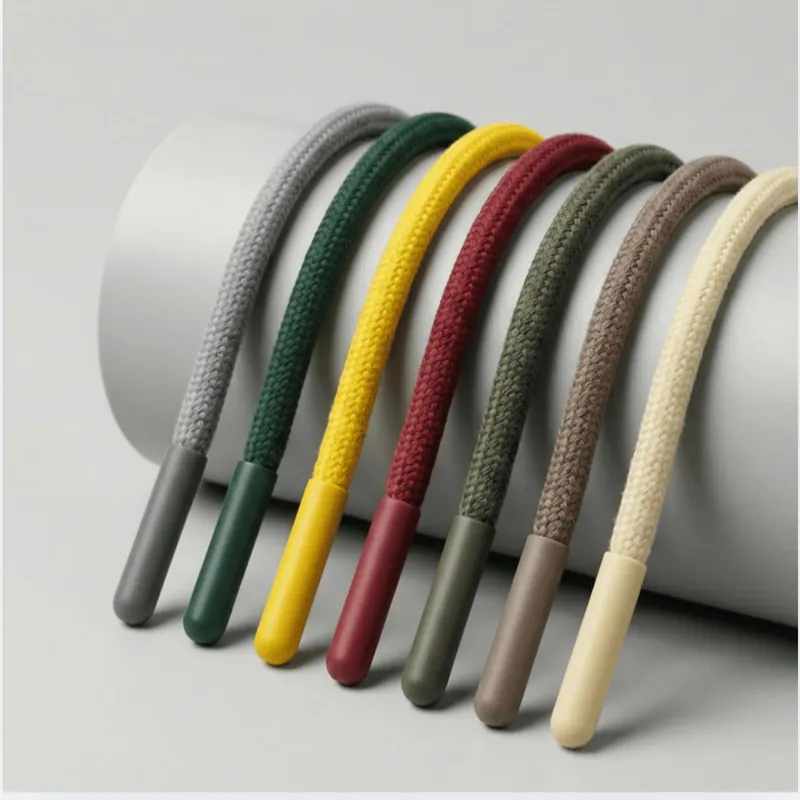 Drawcords
32-Spindle Polyester Filled Drawcord
View
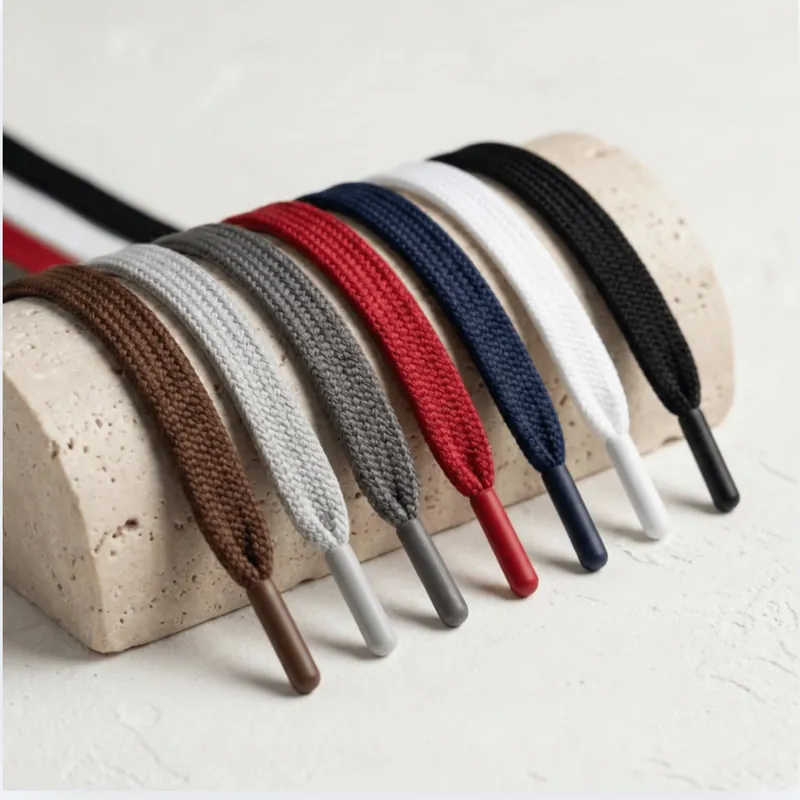 Drawcords
48-Spindle Flat Polyester Drawcord
View
 Drawcords
Colored and Black Filled Polyester Drawcord with Brass Cord Ends
View
 Drawcords
Tight-Braid Filled Black Polyester Drawcord
View
 Drawcords
Brass Metal and Gold Cord Ends
View
 Drawcords
Drawcord with Gold and Silver Cord Ends
View
 Drawcords
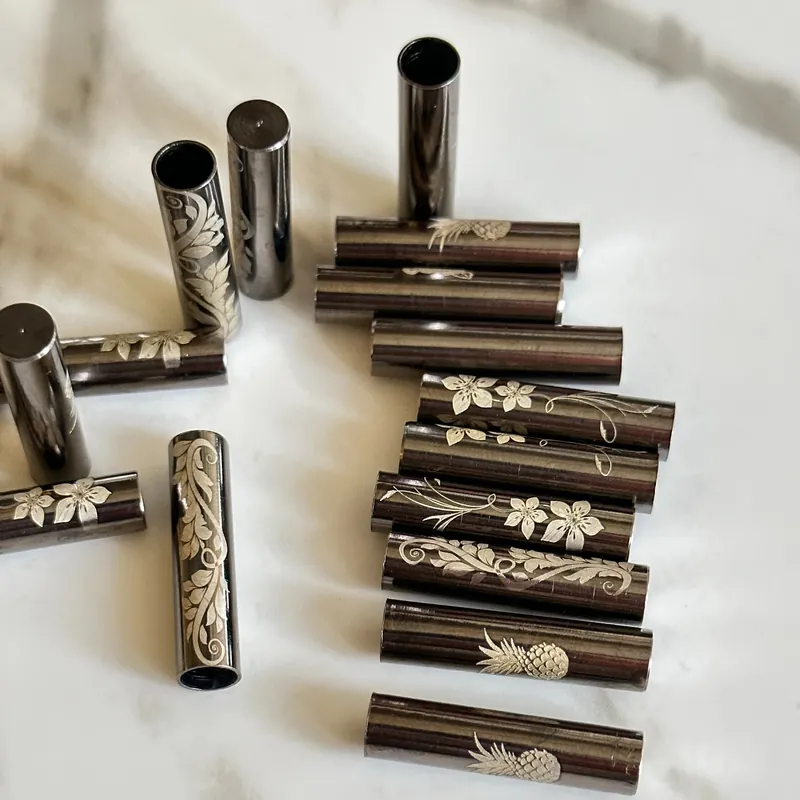
Printed Iron Cord End
View
 Drawcords
Drawcord with Macaron and Plain Cord Ends
View