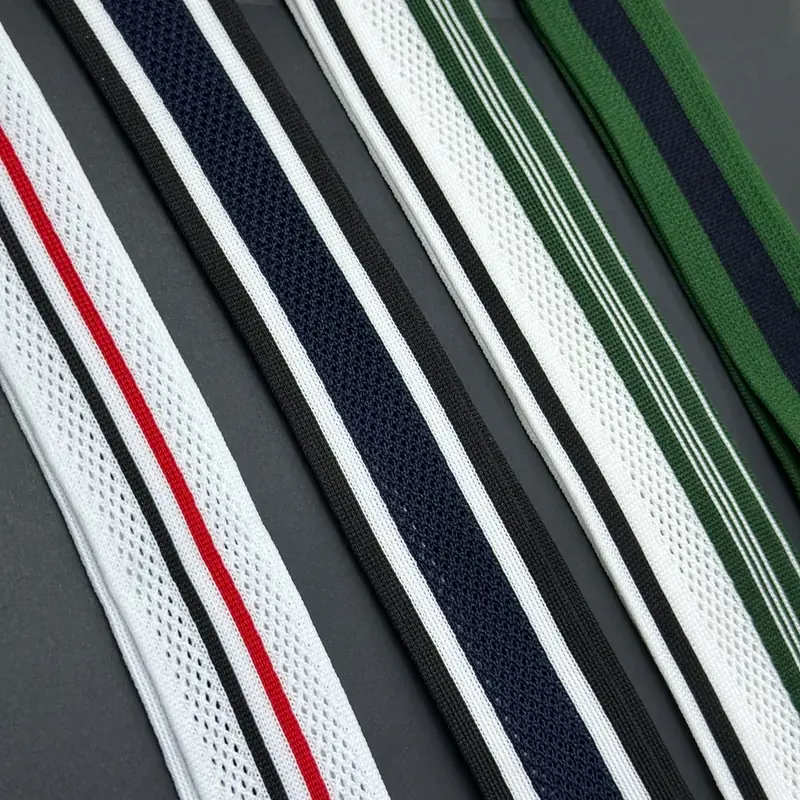
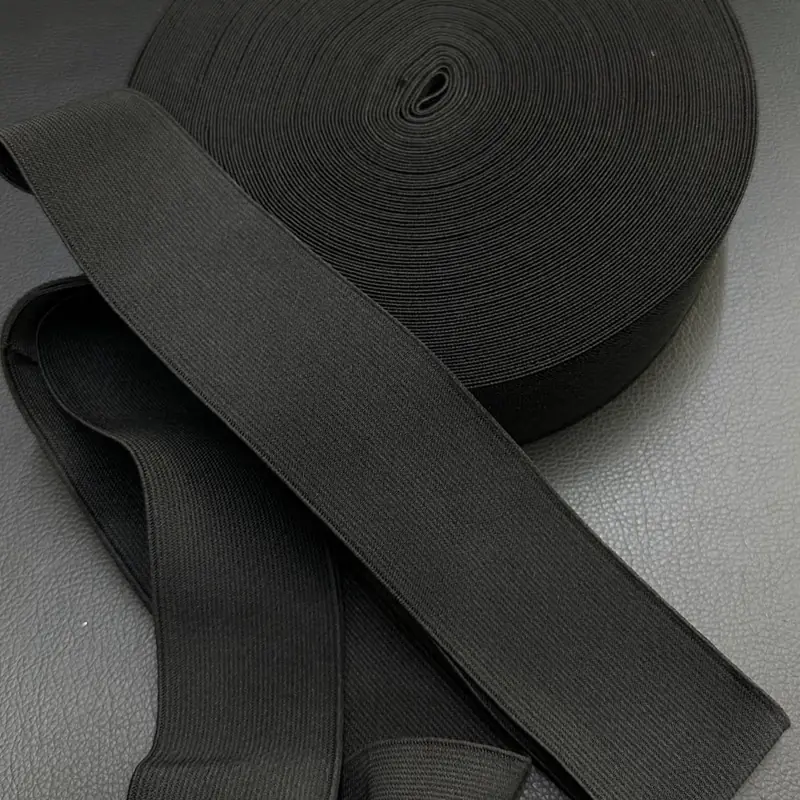
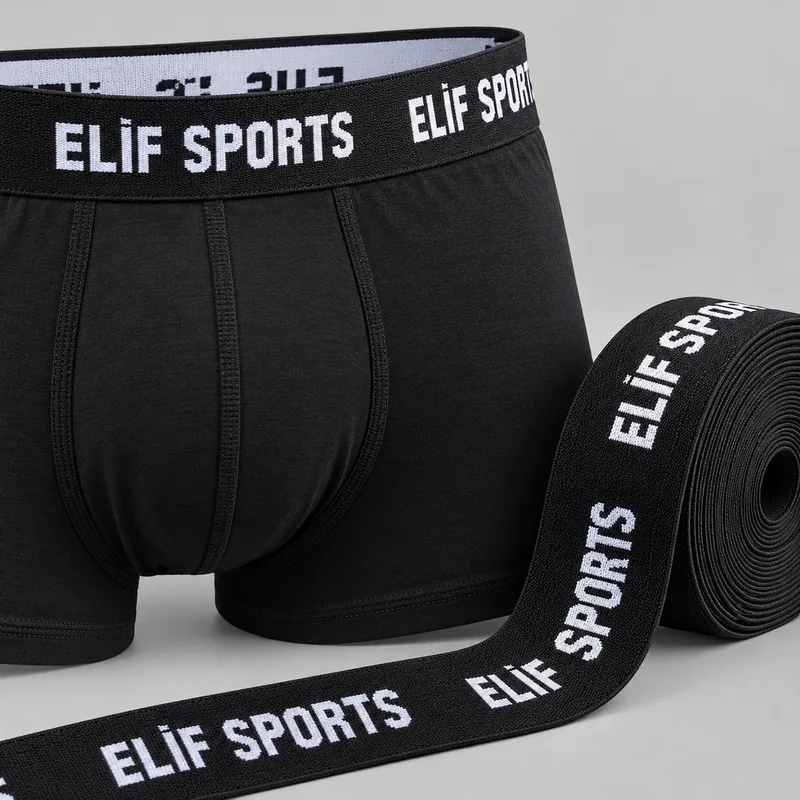
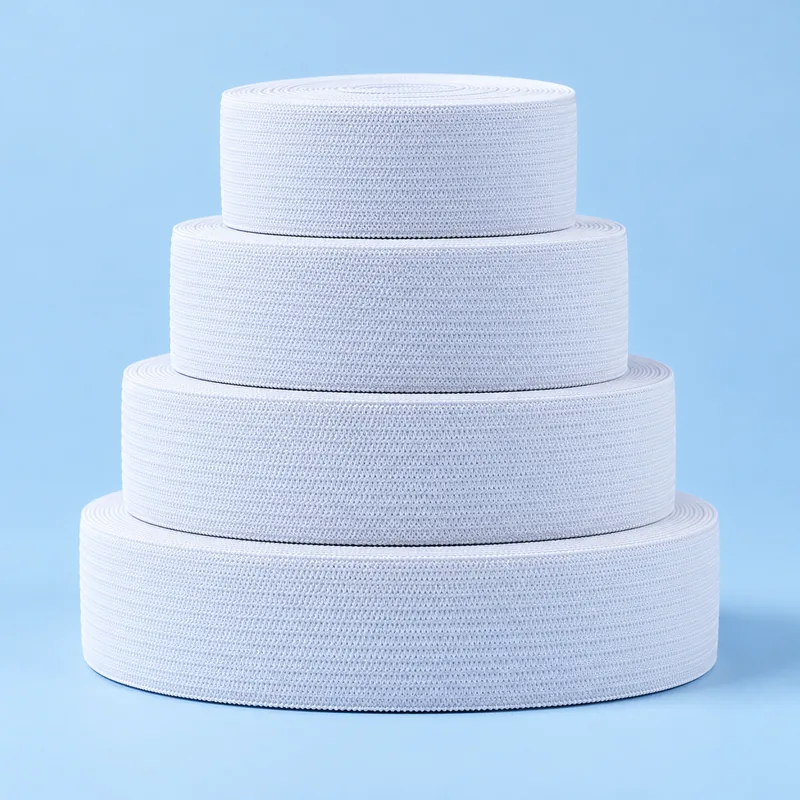
 Hover to zoom
Image is for illustration purposes only.
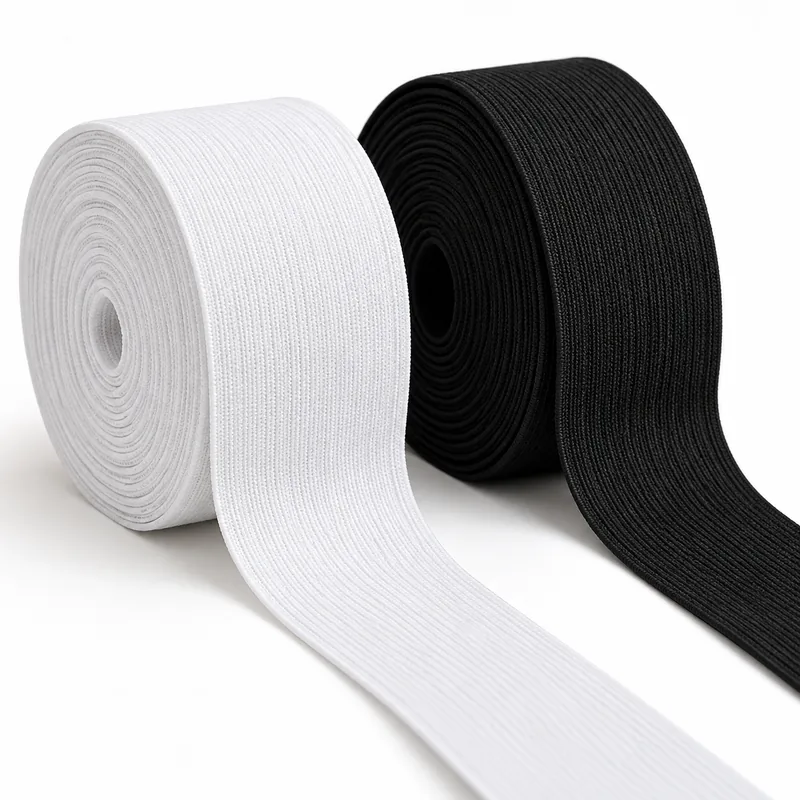
Knitted Elastic
A soft-textured, flexible and lightweight elastic thanks to its knitted construction. Provides comfortable wear in products that touch the skin.
- Product groups
- Elastic Bands
- Type
- Knitted
- Feature
- Soft texture, flexible construction
- Production
- Istanbul · Custom colors and sizes for your brand
Knitted elastic is a stretch band whose looped structure leaves a soft, light feel wherever it touches the skin. At Elif Tekstil Aksesuarları, our production facility in Bağcılar, Istanbul, manufactures knitted elastic for collections where comfort comes first, from underwear and babywear to sleepwear and activewear. Width, color and stretch behavior are defined on a sample to suit your pattern, and on wholesale orders the same hand feel is maintained from the first meter to the last roll.
Request a quoteSoft looped texture
In knitted elastic, the yarns interlock in a series of loops. This structure creates a smooth surface, prevents a harsh edge from forming on the side that touches the skin and keeps the garment comfortable through long hours of wear.
Light, slim profile
Compared with woven bands, it delivers the same stretch function with less material. Because it adds no weight or bulk to the garment, it keeps seam lines discreet on fine fabrics, lace lingerie and summer styles.
Stretch that holds its width
The knitted construction does not narrow noticeably when stretched, which reduces curling and rope-like narrowing at edges and waistbands. The garment keeps a balanced fit even while the wearer is on the move.
Custom brand colors
We dye to your collection color card or fabric swatch. Color approval is given on a sample, and bulk production uses the same shade as its reference, with the aim of keeping lot-to-lot variation under control.
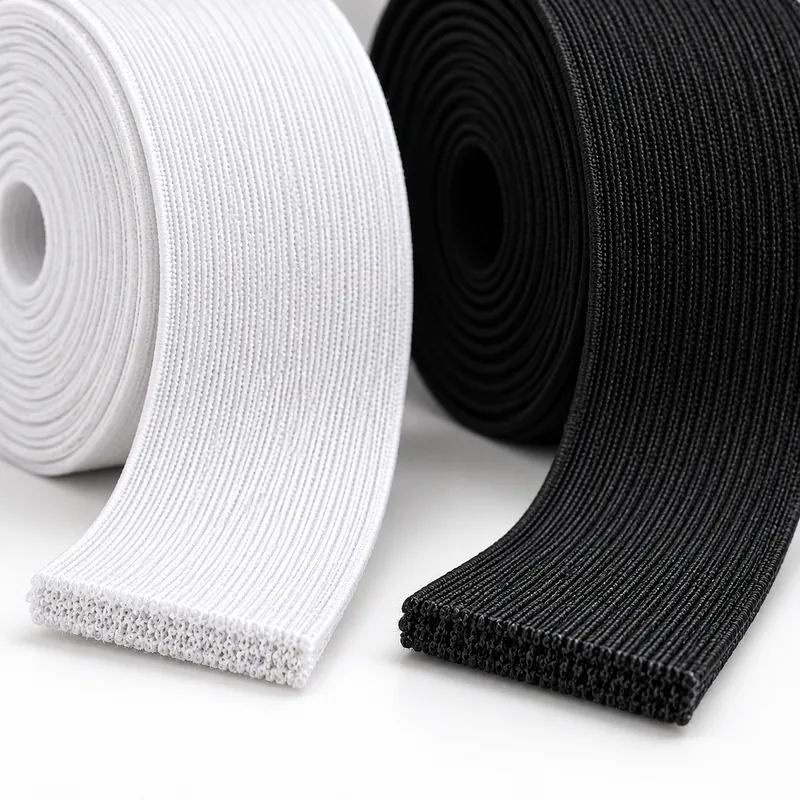
A good knitted elastic goes unnoticed when worn; the moment you notice it, comfort has fallen short somewhere.
A Stretch Band That Builds Comfort Loop by Loop
Knitted elastic is made by wrapping elastic core yarns, loop by loop, with polyester or polyamide covering yarns. In woven elastic, the weft and warp lock together at right angles; in knitted elastic, the yarns travel lengthwise in chain-like loops. That difference directly shapes how the band feels in the hand: knitted elastic is softer, more fluid and lighter. Rubber or spandex can be chosen as the elastic component, depending on the required recovery power, washing conditions and how long the product stays in contact with the skin. The resulting band moves with the garment without constricting the body, doing its job all day without making its presence felt.
Knitted elastic holds a special place in products where comfort directly drives the purchase decision. In underwear, sleepwear, loungewear and babywear, the elastic usually sits right against the skin, and a stiff edge or itchy surface is reason enough for the end user never to buy the product again. The soft texture of the knitted structure reduces that risk. Thanks to its light body, it does not cause rippling or bulging along the seam on fine jersey, modal or viscose fabrics. Another advantage for designers is that knitted elastic looks neat even in narrow widths, giving a clean, flowing line at sleeve openings, leg edges and neckline finishes.
At Elif Tekstil Aksesuarları, a knitted elastic order begins with understanding how your product will be used. Our design team and sample department work with you to assess which fabric the band will be sewn onto, how far it will be stretched and how many washes it will go through. Yarn count, elastic ratio and width are then adjusted accordingly and a sample is prepared. Because we run our own production, we have direct control over color, dimensions and hand feel, and the approved sample becomes the reference for bulk production. Drawing on more than a decade of experience supplying knitted elastic to domestic and international brands, our goal is for the product on the shelf to keep its first-day comfort for a long time.
Knitted Elastic technical details
Values indicate typical production ranges; final size, color and material are confirmed upon sample approval.
- Product
- Knitted Elastic Band
- Type
- Knitted
- Construction
- Looped, lightweight body
- Hand feel
- Soft texture, flexible structure
- Covering yarn
- Polyester or polyamide, on request
- Elastic component
- Rubber or spandex, on request
- Width
- Typically 5–40 mm, on request
- Edge
- Plain or picot
- Surface
- Standard or brushed inner face
- Color
- Dyed to color card or sample
- Stretch behavior
- Defined through sample approval
- Put-up
- Rolls or spools, on request
Where is it used?
Key applications for Knitted Elastic.
Underwear and lingerie
On brief leg openings, bra underbands and strap edges, soft knitted elastic provides support without leaving marks in areas in constant contact with the skin, and it pairs beautifully with lace.
Baby and kidswear
In bodysuits, leggings and baby pants, lightweight knitted elastic reduces pressure marks on delicate skin; it stretches easily when dressing and undressing and springs back to its original shape.
Sleepwear and loungewear
Used as waistband and edge elastic in pajama bottoms, shorts and the cuffs of lounge tees, its non-binding, non-curling structure supports comfort throughout the night.
Sports and activewear
In leggings, sports bras and training shorts, lightweight knitted elastic stretches without slipping during movement and gives a comfortable finish to garments exposed to heavy sweating and frequent washing.
Sleeve and hem finishing
On light knitwear, knit dresses and blouses, it creates a soft gather and a clean silhouette at sleeve openings and hem shirring without weighing the fabric down.
Masks and accessories
In face mask ear loops, headbands, sleep masks and small textile accessories, fine knitted elastic stays in place without putting pressure around the ears or head.
Knitted Elastic Options and Customization
We engineer knitted elastic for your product around a few key variables. The options below can be applied individually or in combination; the final specification is confirmed at the sample stage after fabric, pattern and end use have been evaluated together.
About custom manufacturing- 01
Plain knitted elastic
A classic construction with simple edges and balanced stretch. It can be threaded through a casing or sewn directly onto the fabric, and it is the go-to basic option for sleepwear, loungewear and babywear.
- 02
Picot edge
Small looped scallops create a decorative finish on one or both edges of the band. It is especially popular in lingerie as an elegant, visible edge detail alongside lace and tulle fabrics.
- 03
Brushed inner face
The skin-facing surface is brushed to give it a velvety hand. At points in prolonged contact with the skin, such as bra underbands, waistbands and leg openings, it takes comfort one step further.
- 04
Color and shade matching
Dyeing is based on your fabric swatch or color card reference. Alongside core shades such as white, nude and black, we also match seasonal colors through sample approval.
- 05
Stretch and recovery tuning
By adjusting the elastic content and knit density, we fine-tune how far the band stretches and how firmly it recovers. The result can be a gentle-hold elastic or one with a firmer grip.
Knitted vs. Woven vs. Braided Elastic
The right type of elastic depends on where and how the garment needs to stretch. The table below compares knitted elastic with its two most common alternatives based on general tendencies; the final choice should be confirmed with a sample trial.
| Criterion | Knitted elastic | Woven elastic | Braided elastic |
|---|---|---|---|
| Hand feel | Soft and fluid | Firmer and fuller | Medium, slightly rounded |
| Weight | Light | Heavier | Medium |
| Width under stretch | Largely retained | Retained | Narrows noticeably |
| Direct sewing | Suitable | Suitable | Casing preferred |
| Shape retention | Medium | High | Medium |
| Typical use | Underwear, babywear, sleepwear | Waistbands, outerwear | Gathering in casings |
From request to delivery, step by step
We stay in touch with you at every stage and never move on to the next step without your approval.
- 1
End-use analysis
We discuss which garment, which area and which fabric the elastic will be applied to. Skin contact time, stretch ratio and washing conditions form the starting point of the production recipe.
- 2
Yarn and ratio selection
The type and count of the covering yarn and the type of elastic component are defined. Knit density and width are then finalized on the tech pack according to the target softness and recovery power.
- 3
Sampling and stretch testing
Our sample department prepares the knitted elastic sample, and stretch, recovery and hand feel are checked. We recommend sewing the sample onto your own fabric and fitting it before giving your approval.
- 4
Dyeing and bulk knitting
Dyeing and bulk knitting are carried out using the approved sample as the reference. Throughout production, width, shade and stretch are checked at regular intervals to track consistency with the sample.
- 5
Winding and shipping
Once inspected, the elastic is wound onto rolls or spools as requested, labeled and packed. The shipping schedule is planned together with you to fit your garment production calendar.
Sewing and Quality Control Tips for Knitted Elastic
- Do not overstretch the elastic while sewing; excessive tension strains the looped structure and weakens recovery.
- Choose stretch stitches such as zigzag or coverstitch to preserve the band’s freedom of movement.
- Use a fine needle to avoid cutting the yarns in the knitted body and damaging the elastic core.
- Put the elastic through several washes sewn onto your own fabric, then compare its stretch with its original state.
- High washing temperatures and prolonged tumble drying can shorten the life of the elastic component.
- Store rolls in a dry place away from direct sunlight and heat sources.
Knitted Elastic: your questions answered
Can’t find the answer you’re looking for? Our team is happy to help.
What is the difference between knitted and woven elastic?
The key difference lies in the production technique. In woven elastic, the yarns interlock at right angles to form a firmer, fuller band, a structure suited to areas that need to hold their shape, such as waistbands. In knitted elastic, the yarns are joined by loops, so the band is softer, lighter and more fluid. Knitted elastic is generally preferred for underwear, sleepwear and babywear that sit directly against the skin.
Can knitted elastic be sewn directly onto fabric?
Yes. Knitted elastic can be threaded through a casing or sewn directly onto the fabric. For direct sewing, stretch stitches such as zigzag or coverstitch and a fine needle should be used. Feeding the band at even tension while sewing is the most important condition for achieving a smooth edge without rippling on the finished garment; we recommend finalizing this setting during the sample fitting.
What widths do you produce knitted elastic in?
Knitted elastic is typically used in widths between 5 mm and 40 mm. Narrow bands are preferred for fine finishes such as sleeve openings, leg edges and necklines, while wider bands are used where support is needed, such as waistbands and bra underbands. We determine the most suitable width together with you based on your pattern and fabric, and prepare samples in different widths on request.
Can knitted elastic be used in baby and kidswear?
Thanks to its soft, lightweight structure, knitted elastic is a frequent choice for baby and children’s products. In bodysuits, leggings and pant waistbands, the stretch power can be kept low to reduce pressure marks. If you share the regulations and testing requirements that apply to your product, we will plan the yarn and dye selection accordingly; compliance is assessed on a project-by-project basis.
Can knitted elastic be dyed in custom brand colors?
Yes. All you need to do is share your fabric swatch or color card reference. A lab dip sample is prepared, and bulk production starts after your approval. In addition to core shades such as white, nude and black, we also work in seasonal colors. Since the difference in texture between fabric and elastic can make the same shade look different, we recommend approving the color in daylight, side by side with the fabric.
Does knitted elastic lose its stretch after washing?
With the right choice of materials and proper care, knitted elastic retains its stretch for a long time. Loss of stretch is accelerated mostly by high washing temperatures, prolonged tumble drying and overstretching during sewing. If you tell us your product’s care instructions at the outset, we will select the elastic component accordingly. Before bulk production, we recommend testing the sample’s performance after several washes under your own conditions.
How does a wholesale knitted elastic order work?
The process begins with you telling us about your product and its end use. A sample is then prepared according to width, color and stretch behavior. After sample approval, bulk production and the shipping schedule are planned together; order quantity and delivery time are planned per project. From our production facility in Bağcılar, we supply knitted elastic to domestic brands as well as to garment manufacturers that export.